


Stage 0-1 UX Research for AR in Collegiate Sports

This project addressed a major business risk: avoiding building  the wrong XR solution at launch and discovering hidden bottlenecks. The athletics program was ready to invest in AR hardware, but research showed the real problem was fragmented data infrastructure spread across six disconnected systems. Coaches did not need AR. They needed integrated, accessible information. The findings shifted the strategy, secured $250K in new funding, and prevented a costly misdirection before development began. 

Download Case Study

Role

UX Researcher, Institutional Review Board (IRB) Coordinator

Duration

Stage 0–1 Research 
4 sprints completed 

TEAM

Lead, System Architect, Systems Engineer, Software Engineers

TOOLS

Microsoft OneNote, Microsoft Word, Microsoft Teams

Overview

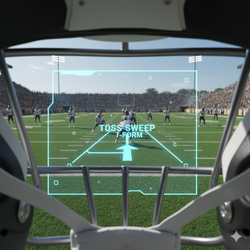
Developed by the Georgia Tech Research Institute (GTRI) in collaboration with the Georgia Tech Athletics Association (GTAA), this AR solution was designed to integrate real-time data visualization into athletic training, transforming performance analysis and reducing injury risk.

As the UX Researcher and IRB Lead, I was responsible for determining whether AR was viable, what problems it should actually solve, and what infrastructure needed to exist before AR could succeed.

Goals

  • Identify user needs and pain points in current training workflows
  • Evaluate AR/VR technologies for comfort, usability, and feasibility
  • Develop a user-centered vision for an integrated AR training system
  • Ensure ethical compliance through Institutional Review Board (IRB) coordination

Research Approach

Stage 0–0.5: Laying the Foundation

Technology Evaluation 

Compared Microsoft HoloLens 2 and Meta Quest 3 for comfort, usability, and alignment with known user needs using a Kano Analysis framework. 

Strategic Recommendation 

Advocated for AR over VR based on stakeholder feedback, user needs, and real-world environmental constraints specific to athletic training environments. 

SWOT Analysis

Identified strengths, weaknesses, opportunities, and threats related to hardware selection, data integration, and stakeholder alignment. 

IRB Coordination

Led efforts to ensure full ethical compliance for human-centered research, a requirement before any interviews could be conducted with GTAA staff. 

Through a consistent focus on end-user needs — from recommending AR over VR to completing SWOT and Kano analyses and securing a pathway for IRB approval — GTAA leadership granted access to begin ethnographic interviews with football coaches and support staff. 

SWOT Analysis

Strengths

Enabled faster stakeholder buy-in

  • Diverse team experience and skillset
  • Direct access and full support of GTAA
  • AR offered easier implementation and lower budget than VR
  • Cross-domain athletic platform development opportunity

Weaknesses

Created adoption risk 

  • Missing tangible assets: athletic sensors, devices, and platforms
  • Gaps in cybersecurity, data storage, and cross-team communication
  • Hardware upgrades needed for AR/VR readiness

Opportunities

Enabled scalable expansion

  • Expansion into additional sports beyond football
  • Ability to deliver specifically what stakeholders requested
  • Opportunity to incorporate human factors and AI elements

Threats

Required proactive mitigation 

  • Scheduling impacts related to IRB approval timelines
  • Dependency on a single manufacturer for AR glasses

Ethnographic Interviews

Method

I conducted six (6) interviews with GTAA staff members. Each session was audio recorded with consent. 

Interview Design 

I designed overlapping questions to explore daily, weekly, and seasonal workflows, building a picture of how staff worked both individually and as a team. AR topics were intentionally introduced at the end of each interview to reduce tension and encourage openness among participants who were hesitant about technology.

Each session closed with a referral request: I asked participants who I should speak with next. This approach doubled as my recruitment strategy, building trust and ensuring each new participant was relevant to the research.

After each interview, I reviewed existing tools and workflows, analyzing pain points and identifying opportunities for improvement.

Sample Interview Questions

Preview Interview Guides

Key Insights: Pain Points, Impacts & Opportunities

Tool Fragmentation 

  • Impact: Consumes scarce staff resources and creates bottlenecks in collaboration and knowledge transfer.
  • Opportunity: Unify platforms for seamless data communication.

Data Silos

  • Impact: Delayed response times across coaching and support staff.
  • Opportunity: Integrate the Athletic Management System with AR for real-time feedback.

Manual Workarounds

  • Impact: Repetition of daily tasks and inefficient use of limited staff time.
  • Opportunity: Optimize data flow with a connected network of wearables and imported data.

Hardware Limitations

  • Impact: Loss of money and compromise of critical data collection efforts.
  • Opportunity: Design with robust hardware built for field use and athletic environments.

Communication Gaps

  • Impact: Researchers and athletics staff lacked a shared language and platform.
  • Opportunity: Build a centralized system that bridges departments and standardizes communication.

The "Aha!" Moment

“We all want to be speaking the same language and reading out of the same book.”
— Head Athletic Trainer, GTAA 

This single quote captured the core finding: the team didn't need AR first. They needed a unified, intuitive Athletic Management System (AMS) that could bridge departments, centralize data, and lay the groundwork for any future AR integration. 

Key Insight & Decision

AR would amplify existing data fragmentation unless a centralized Athletic Management System (AMS) existed first. 

Recommendation: Pause AR delivery. Prioritize AMS development to unify workflows, data, and communication across the athletics department.

This pivot was informed entirely by user research, not technical preference. 
Desired Features (Research-Informed)

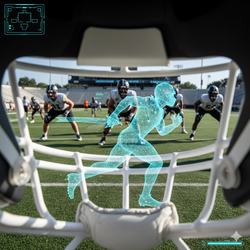
AR Training Glasses 

  • Real-time performance overlays
  • Video recording and playback for drills
  • Durability and comfort for athletes

Athletic Management System (AMS) 

  • Centralized dashboard with color-coded metrics
  • Player load, performance data, injury updates, equipment stats
  • Weekly and seasonal trend comparisons
  • Customizable analytics dashboards
  • Real-time feedback integration
  • Mobile and desktop compatibility
  • Automated reporting
  • Integration with existing tools and wearables (Perch, Whoop, Catapult, etc.) 

Impact

4

Sprints Completed

6

Ethnographic Interviews Conducted 

$250K+

Incremental Project Funding Secured

Actionable Insights 

Stage 0–1 research uncovered critical pain points that directly informed the design of the AMS prototype. 

Strategic Direction 

Research findings shifted the roadmap from AR-first to AMS-first, validating the strategic value of early UX research in emerging tech development. 

Business Goals 

Secured $250K+ in incremental funding across four sprints and positioned the platform for multi-sport expansion. 

Stakeholder Connectivity 

Stakeholders responded enthusiastically to both the preliminary research findings and the interview process. 

What This Project Demonstrates

Translating early-stage research into strategic product decisions

Ability to work in regulated environments requiring IRB compliance 

Comfort with technical and operational constraints in complex systems 

Cross-functional collaboration across engineering, athletics, and compliance teams

Preventing costly misdirection before development begins

Lessons Learned

Asking the right questions early is more valuable than building the right features late. This project reinforced that UX research isn't just about improving a product, it's about making sure you're building the right one in the first place. 

Next Steps

  • Expand usability testing across additional sports divisions
  • Iterate AMS prototype based on ongoing coach and staff feedback
  • Explore real-time AR integration once AMS infrastructure is stable
  • Incorporate accessibility enhancements for broader staff use

Buzz Me

Whether it’s UX, wearables, or AR dreams, I’m all ears (and antennas).

Thank you! Your message has been sent.
Unable to send your message. Please fix errors then try again.